HTS Racing Batteries
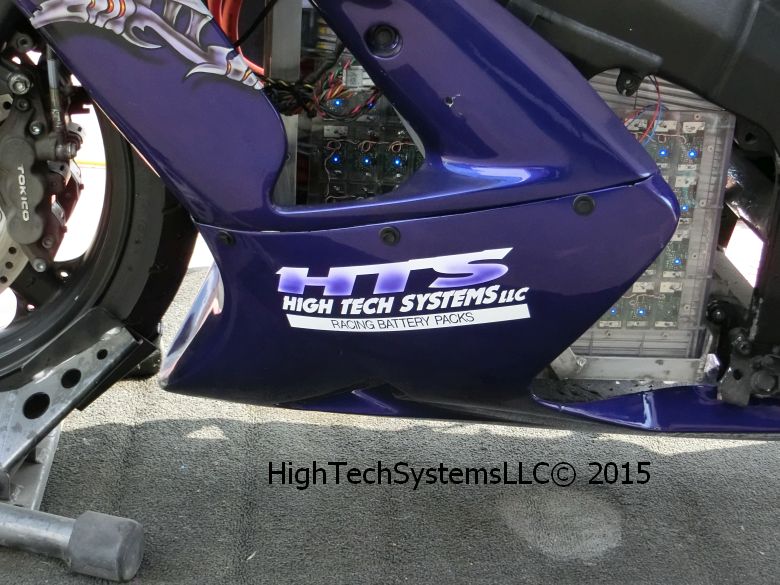
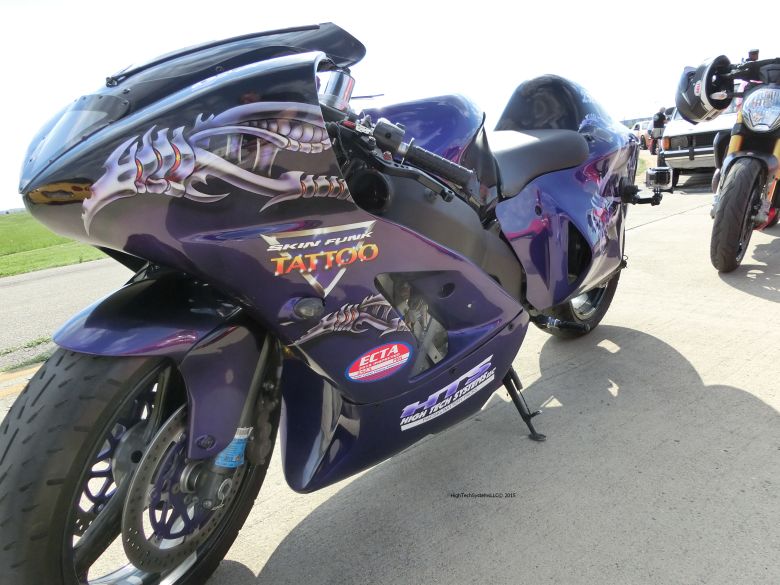
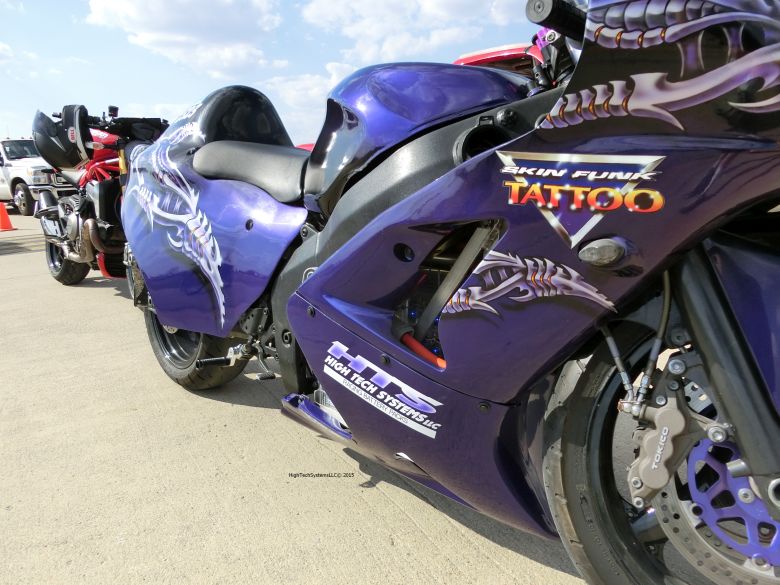
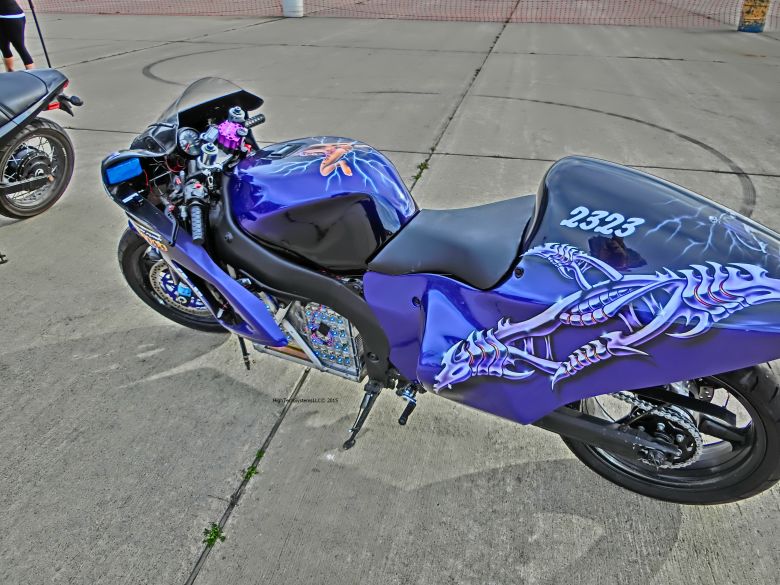
Jeff Disinger (Dice) Street Bike |
|---|
One of the fastest street motor cycles ever built. It went 183.22mph in the standing mile. This runs with a very small High Tech Systems
battery pack truely amazing at this low voltage and power levels.
Zombie222 1968 Mustang |
|---|
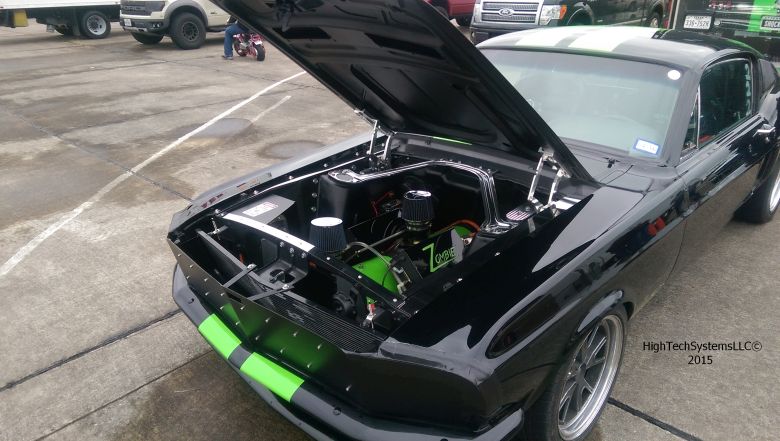
I believe this is the fastest top speed ever in a 1968 Mustang fastback just under 178 in the Texas mile October
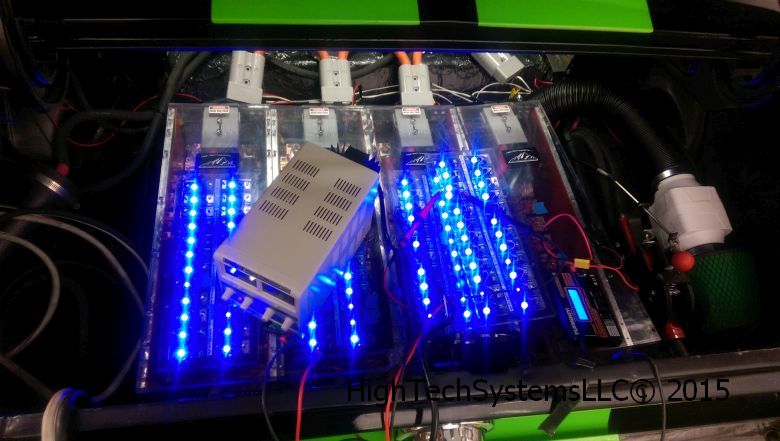
25th 2015. HTS Pack is a
10Px96S 3000amps peak with a peak voltage of 398v.
Don Garlits HTS Battery Powered Dragster Swamp Rat 37 Dragster |
|---|
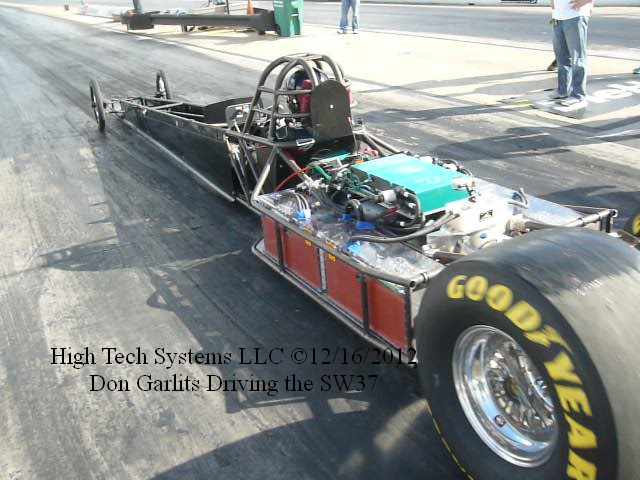
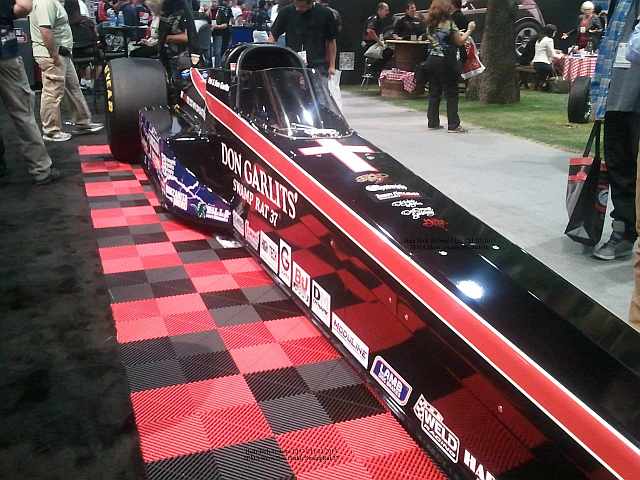
The HTS battery pack being used in the Don Gartits Battery Power Dragster. This is capable of 1.5MegaWatts or 1500KiloWatts.
That means this should produce over 2000 battery horse power. Even at 1/2 power it is fun to watch and the time slip also shows some good times.
Don did a few 300ft launches. Some may have seen this at the SEMA show 2013 as well.
Quanta Products llc 770HP Z06 Corvette Hybrid |
|---|
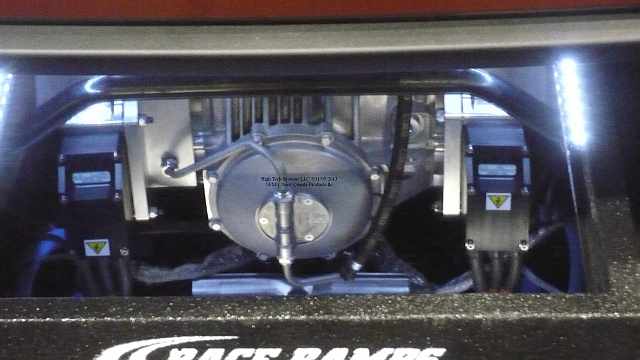
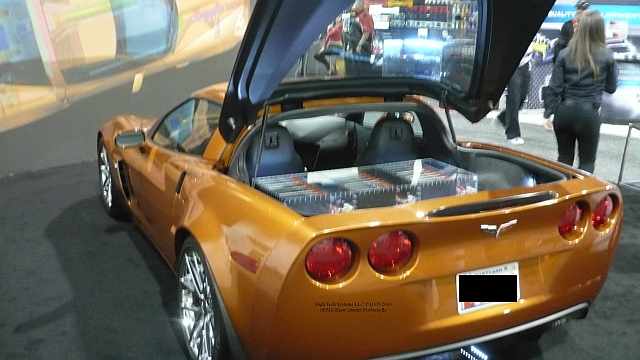
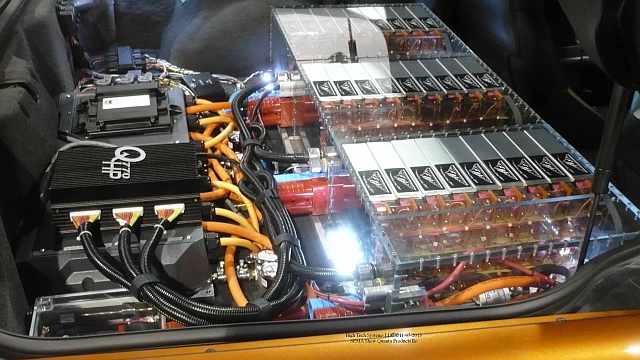
The Quanta Products 770HP Z06 Corvette Hybrid was shown off at SEMA 2013 for the first time.
Using the stock engine setup with very little modifications only to the rear end this hybrid gives you the best of both worlds.
How does it work? The rear end is custom designed with 2 liquid cooled AC drives built into the rear end of the Corvette.
The AC controls and 1000HP HTS battery packs are shown off in the vehicles trunk area for everyone to see. A very cool project.
World Record HTS Battery Packs First Ever In History 6.94sec @ 201.37mph 1/4mile |
|---|
Latest Records:
ROCKET BIKE quickest time 6.94sec @ 201.37mph in 1/4mile May 4th 2012.
Two firsts in electric vehicle history. First to break the 7sec barrier and the first to go over 200mph in 1/4mile.
Made on the TV show OCC 0range County Chopper. Without all the people that worked on this it couldn't be done. Shawn Lawless
the entire crew of OCC, Larry "spiderman" McBride and a special thanks to HTS crew dropping everything to get this battery pack done. The Lawless Rocket bike set 3 NEDRA records with 3 different battery packs
made by High Tech Systems LLC. The first pack weighed in close to 400lbs the second pack over 300lbs and the 3rd pack that set the
record 245lbs of cells. This latest pack will produce over 1MW of power. 1500battery hp. 399v peak 40ah 14.2kWh. No cooling required. Fast recharge
capable of handing 240amps@399volts. Very low internal battery resistances. If you are interested in a battery like this one please
email me.
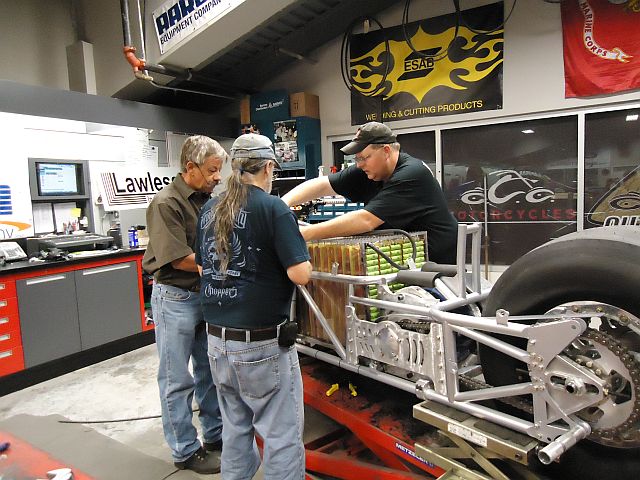
Here is a picture of me working on the first battery for the Rocket Bike at OCC with Dennis Berube motor builder and Skeeter Todd.
|
Here we are at the track first tests Paul Teutul Sr, Larry Spiderman McBride, and myself Derek Barger. 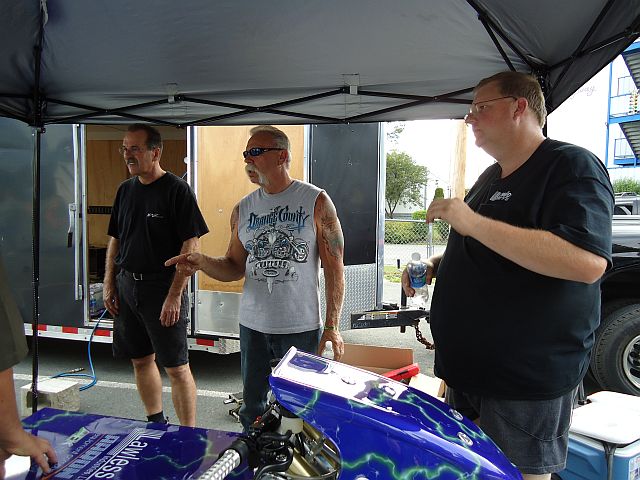
|
|---|
Drayson Racing: We helped in the building of this pack along with Bill and Eva. Very cool project.
Lowell Simmons Black Perl: HTS battery pack. Lowell and his students do a great job with the EV racing and the Perl is very quick.
SSI Racing: One of the first type battery packs.
White Zombie: The first battery that Bill, Steve and I built. See how we got started below to see photos of this pack. We loaned this to the Zombie to set a record.
Schneider Hybrid bike: OCC,Schneider Electric, Lawless Industries, High Tech Systems LLC battery packs.
KillaCycle: Too much to list, see there website there is a lot there.. www.Killacycle.com We have been working with them for years. Set a record on every battery pack more than once.
KillaJoule: Now sponsoring the BMS system for the new land speed vehicle. Very nice EV with lots of great new technology. Sure to break records. Eva has done a great job driving this machine. See website www.evahakansson.se/#home
Mythbusters: The Killacycle team was on the Young Scientists special. Disproving the myth that EV's are slow. We kinda already new that but it good that Mythbusters agreed. We are trying to make them faster everday.
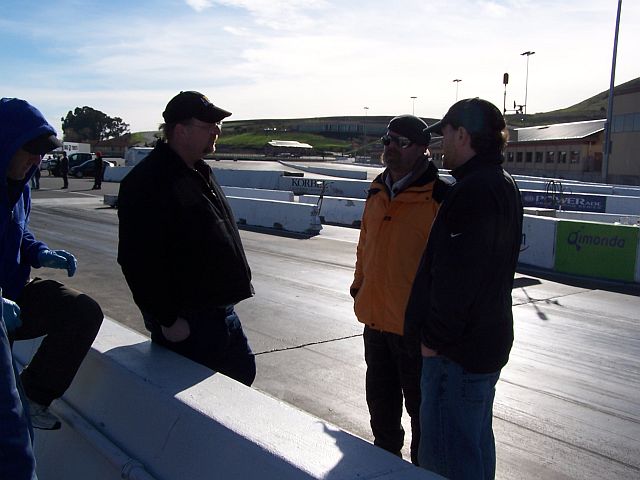
How we got started building A123 System Battery Packs
I can say we build the best packs and BMS(Battery Management System) for Racing. Over the years I have had the great privilege to work with the best EV racers. More Nedra records are held by racing teams that have used the packs we helped build.
www.nedra.com/record_holders.html"
To name a few great racers:
KillaCycle (Bill Dube) www.Killacycle.com,
White Zombie (John Wayland) www.Plasmaboyracing.com,
Lawless Ind (Shawn Lawless),http://www.paradefloats.com/orange.html
2 SSIC(Michael Kadie)
Lowell Simmons
Lots of other great people. If you want your name mentioned let me know?
This is how we used to build packs. They are not made this way anymore. Each battery is custom and as new technology and
battery assembly process changes with each pack we make adjustments to improve quality.
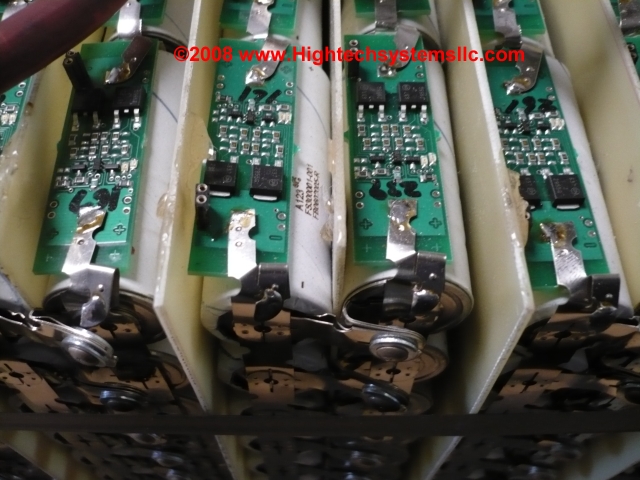
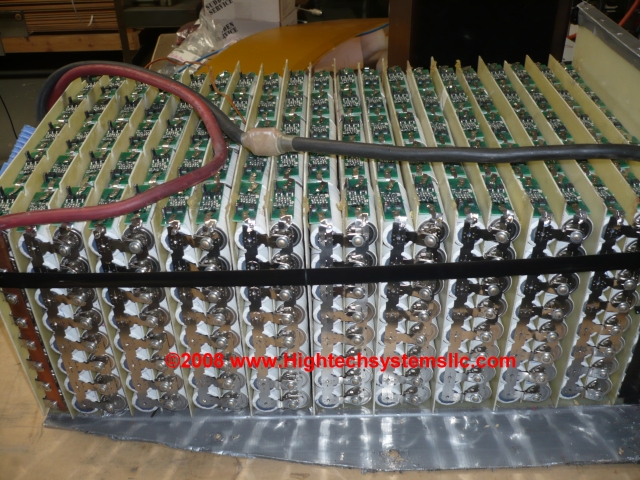
As techniques have gotten better the packs have changed and so has the BMS. The first KillaCycle A123 pack built use the normal nickel plated steel tabs.
It was discovered that 1 tab would get very hot with the amps that we were going to be pulling out of the cell. A second Tab was added to each series connection a single tab for parallel connections.
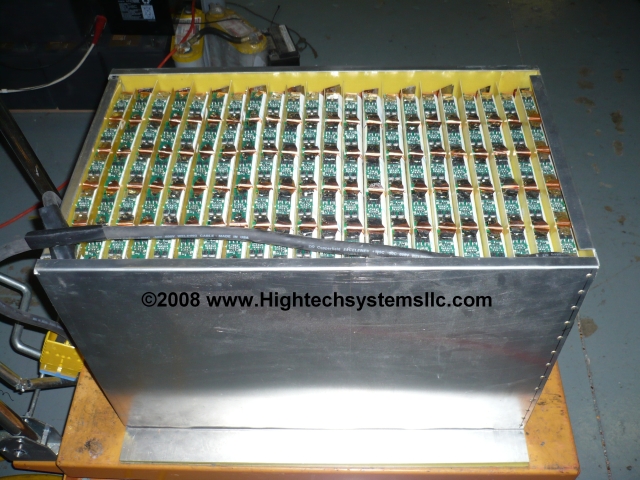
Below is a picture of the first pack with the second generation BMS. You will notice that each cell had to be welded up to 4 times on the ends. This was a very long process and since we have started using copper has made life alot easier. Each steel tab had to be precrimped to form when the cells were unfolded. Unfolding was a 2 man job and took many hours as the steel was not as forgiving as copper.
 |
|---|
 |
|---|
 |
|---|
 |
|---|
 |
|---|
 |
|---|
 |
|---|
 |
|---|
 |
|---|
 |
|---|
 |
|---|
 |
|---|
 |
|---|
 |
|---|
 |
|---|
 |
|---|
 |
|---|
 |
|---|
 |
|---|
 |
|---|
 |
|---|
 |
|---|
 |
|---|